Support workers for
blind & low vision.
Consistent, practical support for adults who are blind or have low vision across our 37 listed Sydney service areas — helping at home and in the community through a small team who learn your routines and preferences.
Clear next steps after you get in touch. You meet your worker before supports start.
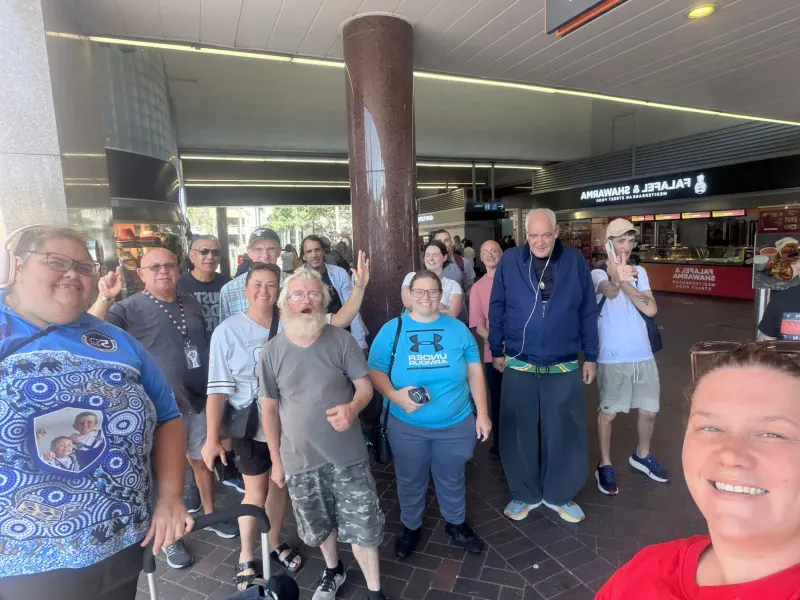
Practical support, shaped around your life
Support workers help adults who are blind or have low vision with the everyday tasks that keep life running — at home and out in the community. It is funded from the Core budget in your NDIS plan and tailored to your goals and the way you like things done.
Daily living & around the home
Help with everyday tasks at home — preparing meals, keeping things organised, sorting mail and correspondence, reading and managing paperwork, and anything else that keeps your day running smoothly.
Getting out in the community
Everyday sighted guidance as you get out and about — shopping, appointments, errands, catching public transport and exploring your neighbourhood. Comfortable, practical assistance, not formal training. Community participation →
Appointments, outings & social life
Support to medical and allied health appointments, social outings and recreational activities — including our Wednesday social and rec group for adults who want to get out and meet people.
A worker who knows how you like things done
When you are blind or have low vision, your support works best when the person helping you already knows your environment, your preferences and your pace — not someone new each week who needs to be shown everything from scratch.
We provide support work across our 37 listed Sydney service areas. We are also a proudly Aboriginal-owned, culturally safe team, and everyone is welcome.
Vision impairment support, answered
Do you support adults who are blind or have low vision?
Yes. We provide NDIS support work for adults who are blind or have low vision across our 37 listed Sydney service areas. Our support workers deliver practical, everyday help — at home and out in the community — tailored to how you like things done.
What can a support worker help with for someone who is blind or has low vision?
A support worker can help with daily living tasks and help around the home, getting out and about in the community with everyday sighted guidance, reading mail and correspondence or helping with admin, travel to appointments and other outings, and social connection — including our Wednesday social and recreation group.
Do you provide orientation and mobility training?
No — orientation and mobility (O&M) training is a specialist Allied Health service delivered by qualified O&M specialists. What we provide is practical, everyday support work: helping you get around in daily life, accompanying you in the community, and assisting with the tasks that make life easier. If you need O&M therapy, your support coordinator can help connect you with an appropriate specialist.
Which Sydney areas do you cover?
We deliver support across our 37 listed Sydney service areas. Call (02) 7265 1558 and we'll get support set up in your area.
Is Tegrity a registered NDIS provider?
Yes. Tegrity Services is a registered NDIS provider (registration number 4050099017), registered with the NDIS Quality and Safeguards Commission. Support work is billed from your Core budget in line with the current NDIS Pricing Arrangements and Price Limits.
Support for a range of needs
Our support workers help adults in our listed Sydney service areas with a wide range of needs, using a small, familiar team where possible and subject to current capacity.
Support that shows up.
Start a referral, or have a yarn with us first. Clear next steps after you get in touch — you meet your worker before anything begins.
Start a referralOr call (02) 7265 1558
What this service does and does not do
Tegrity provides non-clinical support work and Level 2 support coordination. We do not diagnose or treat health conditions, provide therapy, nursing, high-intensity daily personal activities, SIL or Level 3 specialist support coordination. Matching is based on the person’s goals, support tasks, communication, risks and preferences, not only a diagnosis. We explain the proposed worker’s relevant experience before support starts and say clearly when another qualified provider is needed.