How many Aboriginal and Torres Strait Islander people are on the NDIS?
As at 31 March 2025, Aboriginal and Torres Strait Islander people made up 8.1% of active NDIS participants nationally — around 58,100 people — up from 7.9% (about 51,200) two years earlier, according to the Australian Institute of Health and Welfare (AIHW).1 That's about 5.5% of Australia's estimated 1.1 million First Nations people taking part in the scheme.
In New South Wales the share is higher still — 9.3% of NDIS participants are First Nations people, above the national average.1 For a Sydney provider, that makes culturally safe, Aboriginal-owned support not a niche, but a core part of doing the job well.
Aboriginal and Torres Strait Islander people experience disability at higher rates
The higher NDIS share reflects a real difference in need. Based on the 2022–23 National Aboriginal and Torres Strait Islander Health Survey, and after adjusting for age:
- First Nations people were 1.5 times as likely as non-Indigenous Australians to live with disability — 42% compared with 29%.2
- They were twice as likely to have a profound or severe core-activity limitation — needing help with self-care, mobility or communication — at 7.6% compared with 3.9%.2
Higher need alongside historically lower access is exactly why the NDIS has made First Nations participation a priority — and why how support is delivered matters as much as whether it's delivered at all.
Aboriginal communities across inner Sydney
Inner Sydney has long been home to significant Aboriginal communities — Redfern most of all. In the 2021 Census, Aboriginal and Torres Strait Islander people made up:3
- Redfern — 417 people, or 3.2% of the suburb — roughly 2.7 times the surrounding inner-city rate, reflecting Redfern's deep and continuing significance as a First Nations community.
- City of Sydney — 3,009 people (1.4% of the local government area).
- Inner West Council — 2,162 people (1.2% of the local government area).
These are the communities Tegrity works in every week — including Redfern, Marrickville and across the Inner West.
Why culturally safe, Aboriginal-owned support matters
The AIHW defines cultural safety as care that is judged by the person receiving it, not the person giving it — care that understands culture, acknowledges difference, and is actively respectful of it, so that no interaction leaves a person feeling diminished.4 In disability support, that's the difference between a plan someone uses and one they quietly walk away from.
The NDIA's own First Nations Strategy 2025–2030 commits the scheme to becoming more equitable, culturally safe and community-centred for First Nations people with disability — recognising that access alone isn't enough without support that's delivered safely.5 The gap it responds to is real and measured: the Disability Royal Commission reported in 2023 that First Nations NDIS participants were 28% less likely to receive care through the scheme than non-Indigenous participants.6
What does the NDIS offer Aboriginal participants?
The same funded supports as every participant — support workers, support coordination, therapy, equipment, community access — plus specific commitments under the First Nations Strategy 2025–2030: supports designed with community, delivered in culturally safe ways, and better pathways in remote and First Nations communities.5 Nothing about being Aboriginal changes what your plan can fund. What changes is how well the scheme works for you in practice — which is why who delivers your supports, and whether you can raise problems safely, matters so much.
How do I get started with the NDIS as an Aboriginal participant?
Three steps. First, check eligibility and make an access request — the NDIS covers permanent and significant disability for people under 65; call the NDIA on 1800 800 110 or start through your local area coordinator. Second, gather your evidence — your GP, an Aboriginal Medical Service or ACCHO can help pull together the reports that show how disability affects daily life. Third, once a plan lands, choose providers you trust — you have full choice, including Aboriginal-owned providers, and you can ask any provider to be matched with an Aboriginal worker. If family or kin are helping you navigate it, bring them — a plan that fits community and family obligations is a plan that gets used.
Aboriginal NDIS support in Sydney with Tegrity
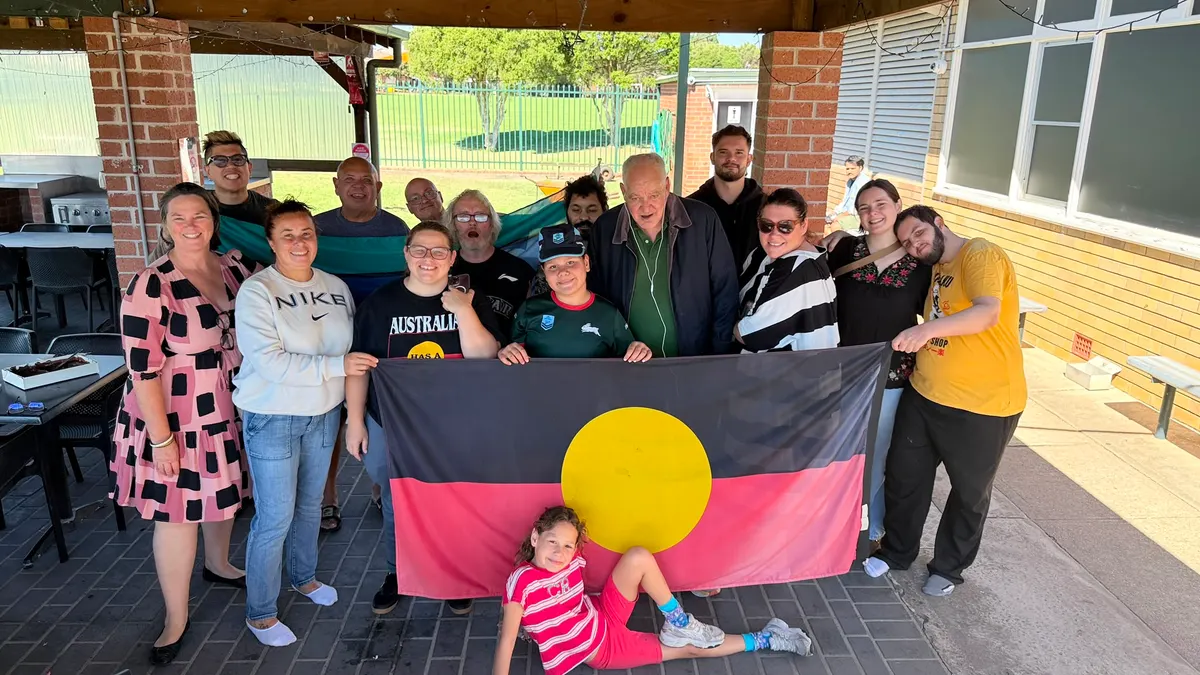
Tegrity Services is an Aboriginal-owned NDIS provider with Aboriginal support workers, coordinators and participants. We offer culturally safe support work and support coordination across our listed Sydney service areas — and you can ask to be matched with an Aboriginal worker or coordinator. Everyone is welcome. If you'd like to talk it through, send a referral and we'll confirm receipt and explain the next step. You can also read our guide to First Nations Connect and the NDIS.