Support workers for adults
with Down syndrome,
who actually show up.
Patient, consistent support workers for adults with Down syndrome across our 37 listed Sydney service areas — helping with daily living, getting out, staying connected and building independence, one step at a time.
Clear next steps after you get in touch. You meet your worker before supports start.
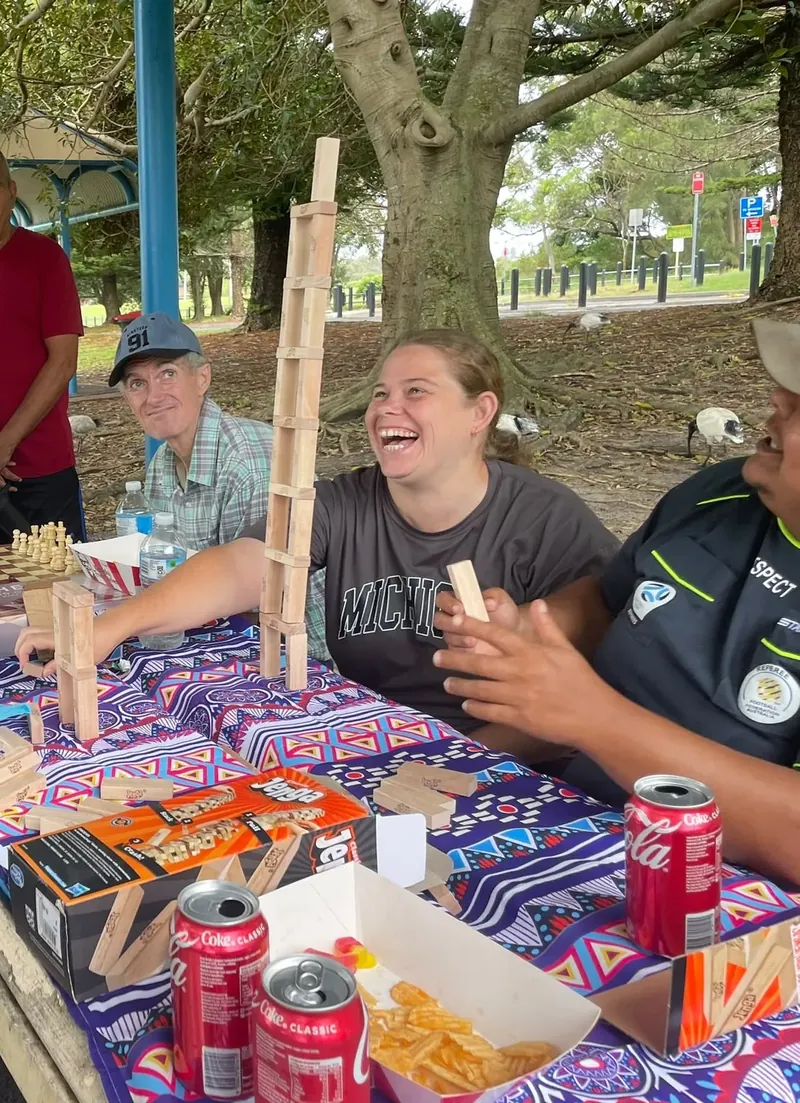
Everyday support, at your pace
Our support workers help adults with Down syndrome with the everyday things that matter most — from home routines to getting out and staying connected. We follow each person's goals, at their pace, building confidence along the way.
Daily living & life skills
Help with home routines, personal care and the everyday tasks of life — done your way. Building skills and independence over time, whether that's cooking, managing a routine or keeping the home tidy.
Community access & getting out
Shopping, sport, outings and community activities — getting out and being part of things. Including our Wednesday social and rec group and support to appointments. More on community participation →
Social connection & confidence
Support to build and keep friendships, join in group activities and feel confident out in the community. Real outings with real people — not just sitting at home.
Familiarity builds trust. Trust builds independence.
For adults with Down syndrome, a familiar face makes an enormous difference. Knowing your support worker — their voice, their style, their patience — means you can focus on what you're doing, not on managing a stranger.
We support adults with Down syndrome across our 37 listed Sydney service areas. We're also a proudly Aboriginal-owned, culturally safe team, and everyone is welcome.
Down syndrome NDIS support — your questions
Do you support adults with Down syndrome?
Yes. Tegrity Services provides NDIS support work for adults with Down syndrome across our 37 listed Sydney service areas. We focus on daily living, community access, social connection and building independence — with a small, consistent support team.
What can a support worker help with for someone with Down syndrome?
Support workers help with everyday life: daily living and home routines, building life skills and independence, getting out into the community, social activities (including our Wednesday group), and support to appointments. We work at each person's pace, following their goals — not ours.
Can I keep the same support worker each visit?
We match you with a small team you meet before anything starts. If a shift needs to change, we speak with you about a suitable replacement and keep the team familiar. If a worker is not the right fit, we rematch you.
Which Sydney areas do you cover?
We provide support work across our 37 listed Sydney service areas. Call (02) 7265 1558 and we'll get support set up in your area.
Are you a registered NDIS provider?
Yes. Tegrity Services is a registered NDIS provider (registration number 4050099017), registered with the NDIS Quality and Safeguards Commission. We deliver support work funded from the Core budget in your NDIS plan.
Other people we support
Our support workers help adults across our listed Sydney service areas with a wide range of needs — consistent, patient support, every time.
- NDIS support work
- Autism support for adults
- Intellectual disability
- Acquired brain injury (ABI)
- Cerebral palsy
- Multiple sclerosis (MS)
- Spinal cord injury
- Epilepsy
- Parkinson’s disease
- Blind / low vision
- Complex needs
- Young adults / school leavers
Explore: Community participation · Wednesday rec group · Start a referral
Support that shows up — every time.
Start a referral, or have a yarn with us first. Clear next steps after you get in touch — you meet your worker before anything begins.
Start a referralOr call (02) 7265 1558
What this service does and does not do
Tegrity provides non-clinical support work and Level 2 support coordination. We do not diagnose or treat health conditions, provide therapy, nursing, high-intensity daily personal activities, SIL or Level 3 specialist support coordination. Matching is based on the person’s goals, support tasks, communication, risks and preferences, not only a diagnosis. We explain the proposed worker’s relevant experience before support starts and say clearly when another qualified provider is needed.