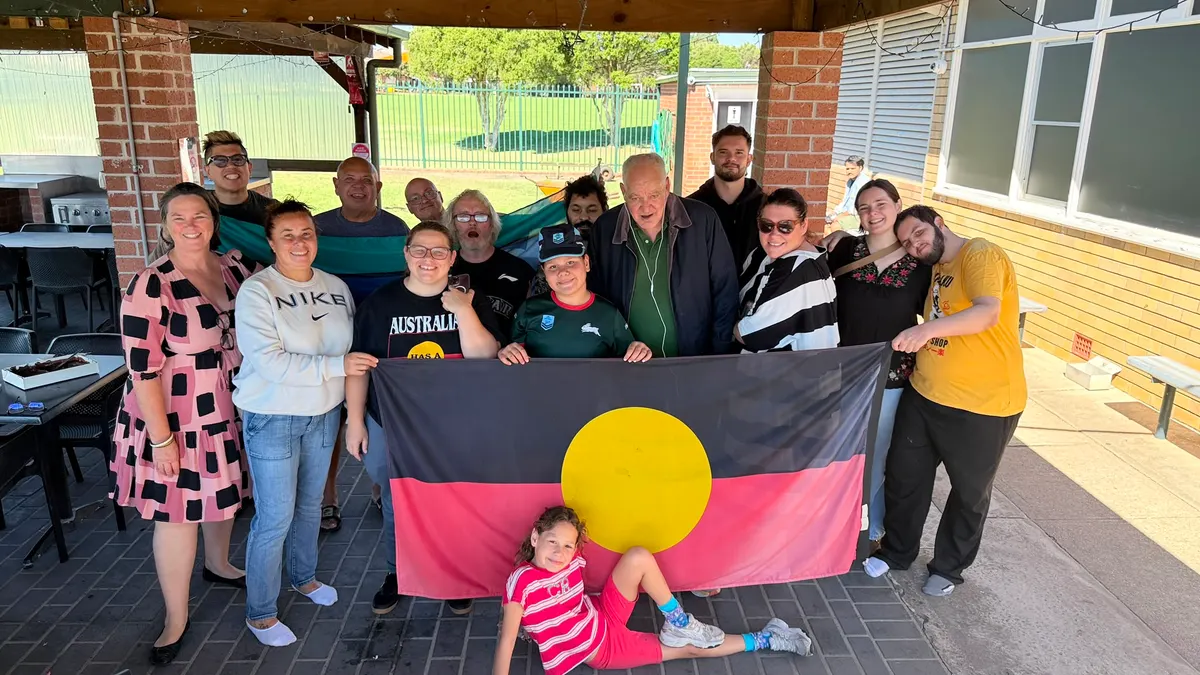
What does “culturally safe” support mean?
Culturally safe disability support is support that respects and is shaped by your culture, identity, community and family — so you never have to explain yourself, code-switch, or leave part of who you are at the door. The idea comes from First Nations health and care, and it puts the focus on how support feels to the person receiving it, not just what's delivered.
The Australian Institute of Health and Welfare describes cultural safety as care that understands one's own culture, acknowledges and is actively respectful of difference, and is mindful of power imbalances — and, crucially, it is “defined by the experience of the” individual, family or community receiving the care, “not by the caregiver.” (AIHW) In other words, only the person being supported can say whether their support is culturally safe. If you want to understand what cultural safety actually means before choosing anyone — the concept, the day-to-day behaviours, and how to test a provider's claims — read our practical guide: what culturally safe NDIS support actually looks like.
Cultural safety vs cultural awareness
These get used interchangeably, but they're not the same thing. Cultural awareness is knowing that different cultures exist and something about them — useful, but it lives with the worker. Cultural safety goes further: it isn't measured by what a worker knows, but by whether you feel safe, respected and in control of your own support. A worker can be culturally aware and still not deliver cultural safety. That's exactly why being able to choose your worker, and genuine lived experience on the team, matter more than a training certificate on the wall.
Why cultural safety matters in disability support
For many people — and especially Aboriginal and Torres Strait Islander participants — support that does not understand culture can feel unsafe and become harder to use. The NDIS First Nations Strategy 2025–2030 makes cultural safety, fair access and community-centred support explicit priorities. Culturally safe practice cannot guarantee an outcome, but it can remove avoidable barriers to trust and participation.
This isn't a small group. Aboriginal and Torres Strait Islander people make up 8.1% of NDIS participants nationally and 9.3% in NSW, and are 1.5 times as likely as other Australians to live with disability — so how support is delivered, not just whether it's delivered, shapes real outcomes for a lot of people.
The stakes can be especially high where mental health is involved: First Nations people are markedly over-represented among NDIS participants with psychosocial disability, while trust and continuity matter in any support relationship. That is why our psychosocial and mental health support is designed around cultural safety from the start, not added later as a label.
What culturally safe support looks like in practice
Cultural safety isn't a policy document — it's the small, concrete things that add up to feeling respected. In practice it looks like:
- Workers who understand culture, kinship and community
- Being matched with people you feel genuinely comfortable with
- Support built around your goals and community — not over them
- A team that listens, where you can request a worker of a particular background
At Tegrity, that means you meet your worker before supports start, you get a small consistent team — the a familiar small team each week, not a rotation of strangers — and you can ask to be matched with an Aboriginal worker or coordinator. Rosters are published a fortnight ahead so there are no surprises, community connection is built in through things like our weekly rec group, and we open by acknowledging the Traditional Custodians of the lands we work on. Cultural safety runs through support work, support coordination and community participation alike — and everyone is welcome, whatever your background.
Culturally safe support for Aboriginal and Torres Strait Islander participants
Tegrity is an Aboriginal-owned NDIS provider, with many Aboriginal support workers, support coordinators and participants. For Aboriginal and Torres Strait Islander people, that means a team that understands culture, community and family because they live it — and you can ask to be matched with an Aboriginal support worker or support coordinator. Here's how to make that request through your NDIS plan, step by step.
How to find a culturally safe provider
Look for genuine lived experience rather than a label, and ask direct questions before you commit. A few worth asking any provider:
- Can I request a worker of a particular background, gender or community?
- Will I meet my worker before support starts?
- Will I have a consistent team, or a different person each shift?
- How do you build support around my culture, community and family?
- Do Aboriginal and Torres Strait Islander people work across your team — including in leadership?
If a provider can answer these clearly and comfortably, that tells you a lot. Tegrity is an Aboriginal-owned provider delivering culturally safe support across our listed Sydney service areas — and everyone is welcome. If you'd like to talk it through, send a referral and we'll confirm receipt and explain the next step. You can also read more on Aboriginal and Torres Strait Islander people and the NDIS, or weigh up Aboriginal-owned vs mainstream providers.
Is culturally safe support only for Aboriginal and Torres Strait Islander people?
No. The concept comes from First Nations health care, and it matters most where the gap between a person's culture and a service's assumptions is widest — but cultural safety applies to everyone. Support that respects your language, faith, family structure, gender and identity is simply better support, whatever your background. At Tegrity, Aboriginal and Torres Strait Islander participants can be matched with Aboriginal support workers, and participants from any community can ask for a worker they feel genuinely comfortable with. Everyone is welcome.
Culturally safe disability support in Sydney
We deliver culturally safe NDIS support across our listed Sydney service areas — the Inner West, City and Eastern Suburbs, plus Bankstown, Liverpool and surrounding south-west suburbs — as part of our NDIS support across our listed Sydney service areas. In practice that means Sydney-based workers you meet before supports start, the option to request an Aboriginal worker or coordinator, and community connection built in through the weekly rec group that heads out across the city. If you're comparing providers, our guide on how to choose an NDIS provider gives you the questions to ask — including the cultural-safety ones above.