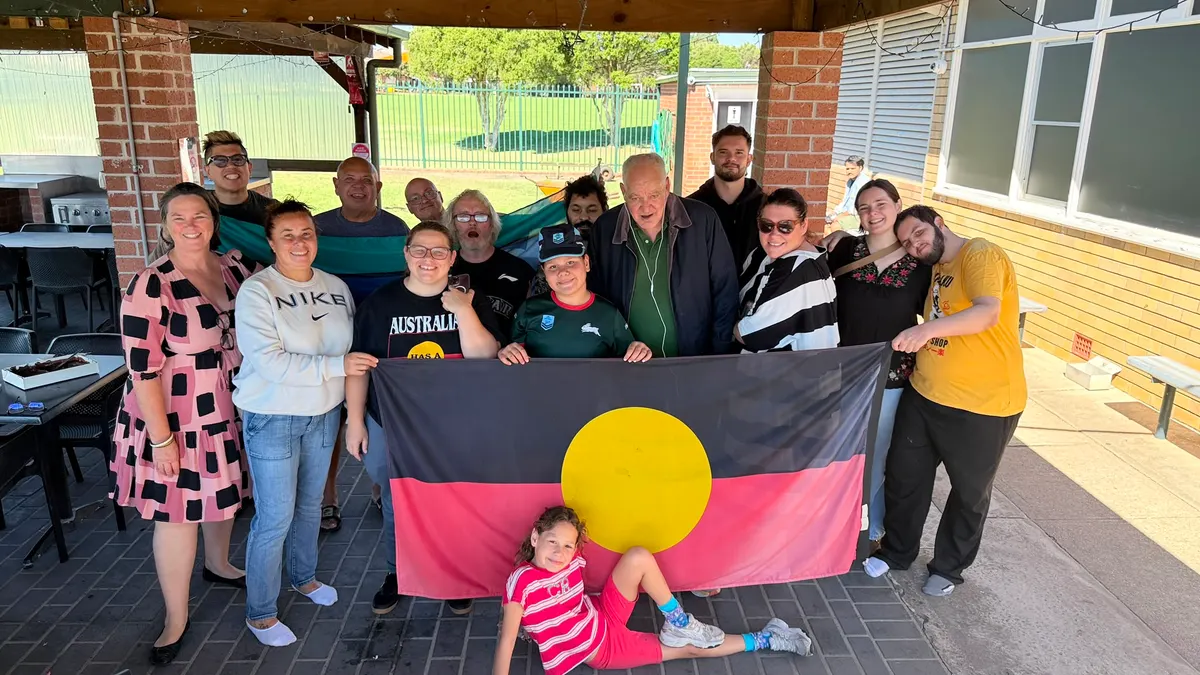
What “Aboriginal-owned” actually means
Aboriginal-owned means the business itself — not just some of its staff — is owned and controlled by Aboriginal people. Decisions about who gets hired, how supports are delivered, and what the organisation stands for are made by people with lived experience of culture, community and family. The organisation is accountable to community in a way that can't be delegated to a program or a policy.
That's a different thing from a mainstream provider that employs Aboriginal support workers, and different again from one that has completed cultural awareness training. All three can be good; they're just not the same claim.
What a mainstream provider offers
Mainstream providers can be excellent. Larger ones offer scale: more suburbs covered, more workers to choose from, sometimes clinical services under the same roof. Many run genuine cultural-awareness programs, employ Aboriginal staff, and hold a Reconciliation Action Plan (RAP) — a formal commitment to reconciliation actions developed with Reconciliation Australia.
The important thing to understand about a RAP is what it is and isn't: it's a plan and a commitment, which can be sincere — but it is not ownership. Governance, profit and final decisions still sit outside Aboriginal hands. Cultural safety can still be delivered well by a mainstream team; it just depends on the people, not the document.
Side by side
| What to compare | Aboriginal-owned provider | Mainstream provider |
|---|---|---|
| Ownership & governance | Owned and controlled by Aboriginal people; accountability to community is built into who runs it. | Owned by non-Indigenous shareholders, boards or founders; cultural commitments live in policies and programs (e.g. a RAP). |
| Lived experience | Cultural knowledge comes from the top down and is everyday practice, not training content. | Depends on individual staff; may employ Aboriginal workers, often concentrated in frontline roles. |
| Cultural safety | The default way of working — kinship, community and cultural obligations are understood without explanation. | Varies by team and worker; can be genuine, but the participant often has to test it first. |
| Verification | Ownership can be verified — ask directly, or look for listing on Supply Nation's Indigenous Business Direct (verified ≥51% Indigenous-owned). | Look for a published RAP, Aboriginal staff in leadership, and what Aboriginal clients say in reviews. |
| Cost under the NDIS | Identical — every provider works to the same NDIS price limits, from the same plan budgets. | |
The practical difference day-to-day
On paper the supports are the same — support work, support coordination, community participation. The difference shows up in the small moments: whether you have to explain why family obligations moved your week around, whether your worker understands community without a briefing, whether you feel like you're educating your provider or being supported by them. The Australian Institute of Health and Welfare's cultural safety framework makes the key point: cultural safety is defined by the person receiving the care, not the caregiver (AIHW). Only you can say whether your support feels safe.
This matters at scale, too: Aboriginal and Torres Strait Islander people are a significant and growing share of NDIS participants — see the numbers in Aboriginal and Torres Strait Islander people and the NDIS in Sydney.
Does the choice affect your funding?
No. Aboriginal-owned and mainstream providers claim from the same plan budgets and applicable NDIS price limits. One thing to check is registration: if your plan is agency-managed (NDIA-managed), you must use a registered provider. The NDIS Commission provides an official registered-provider search; Tegrity Services is registered under provider number 4050099017.
How to verify an ownership claim
- Ask directly: “Who owns the business?” Genuinely Aboriginal-owned providers answer plainly.
- Look for verification through Supply Nation's Indigenous Business Direct directory, which lists businesses verified as at least 51% Indigenous-owned.
- Ask whether Aboriginal people hold leadership roles — not only frontline roles.
- Ask Aboriginal participants and coordinators in your community what their experience has been.
When a mainstream provider is the right choice
Honestly: sometimes it is. If you need specialised clinical services an Aboriginal-owned provider doesn't offer, if there's no Aboriginal-owned option covering your area, or if you already have a worker relationship that genuinely works — keep what works. The right provider is the one whose support you'll actually use. You can also mix: for example, a mainstream therapy provider alongside an Aboriginal-owned team for support work or support coordination.
If what you want is an Aboriginal worker specifically, here's how to request an Aboriginal support worker through your NDIS plan — and for the bigger picture, our guide on how to find an Aboriginal NDIS provider in Sydney.
About Tegrity Services
Tegrity Services is an Aboriginal-owned, NDIS-registered provider in Sydney (provider number 4050099017, registered with the NDIS Quality and Safeguards Commission until October 2028). We deliver support work, support coordination and community participation across Redfern, the Inner West, the City, the Eastern Suburbs and South-West Sydney. Many of our support workers, coordinators and participants are Aboriginal — and everyone is welcome, whatever your background.
Frequently asked questions
What does “Aboriginal-owned” mean for an NDIS provider?
It means the business itself is owned and controlled by Aboriginal people — ownership and decision-making sit with Aboriginal owners, not just Aboriginal staff or a cultural program. That shapes hiring, how supports are delivered, and who the organisation answers to.
Is a provider with a Reconciliation Action Plan the same as an Aboriginal-owned provider?
No. A Reconciliation Action Plan (RAP) is a formal commitment to reconciliation actions inside a mainstream organisation. It can be genuine and valuable, but it is a plan, not ownership — governance and accountability still sit outside Aboriginal hands.
Does an Aboriginal-owned provider cost more under the NDIS?
No. All NDIS providers work to the same NDIS price limits. Support work and support coordination from an Aboriginal-owned provider are claimed from the same budgets at the same rates as any other provider.
How do I verify that a provider is really Aboriginal-owned?
Ask directly who owns the business. Genuinely Aboriginal-owned providers answer plainly. You can also look for verification through Supply Nation's Indigenous Business Direct directory, which lists businesses verified as at least 51% Indigenous-owned, and ask whether Aboriginal people hold leadership roles, not just frontline roles.
Do I have to be Aboriginal to use an Aboriginal-owned NDIS provider?
No. Aboriginal-owned providers support participants from every background. Tegrity Services is Aboriginal-owned and open to all — cultural safety makes support better for everyone.
When is a mainstream NDIS provider the better choice?
When it genuinely fits your needs better — for example specialised clinical services an Aboriginal-owned provider doesn't offer, coverage in an area with no Aboriginal-owned option, or an existing worker relationship that works well. The right provider is the one that delivers support you'll actually use.