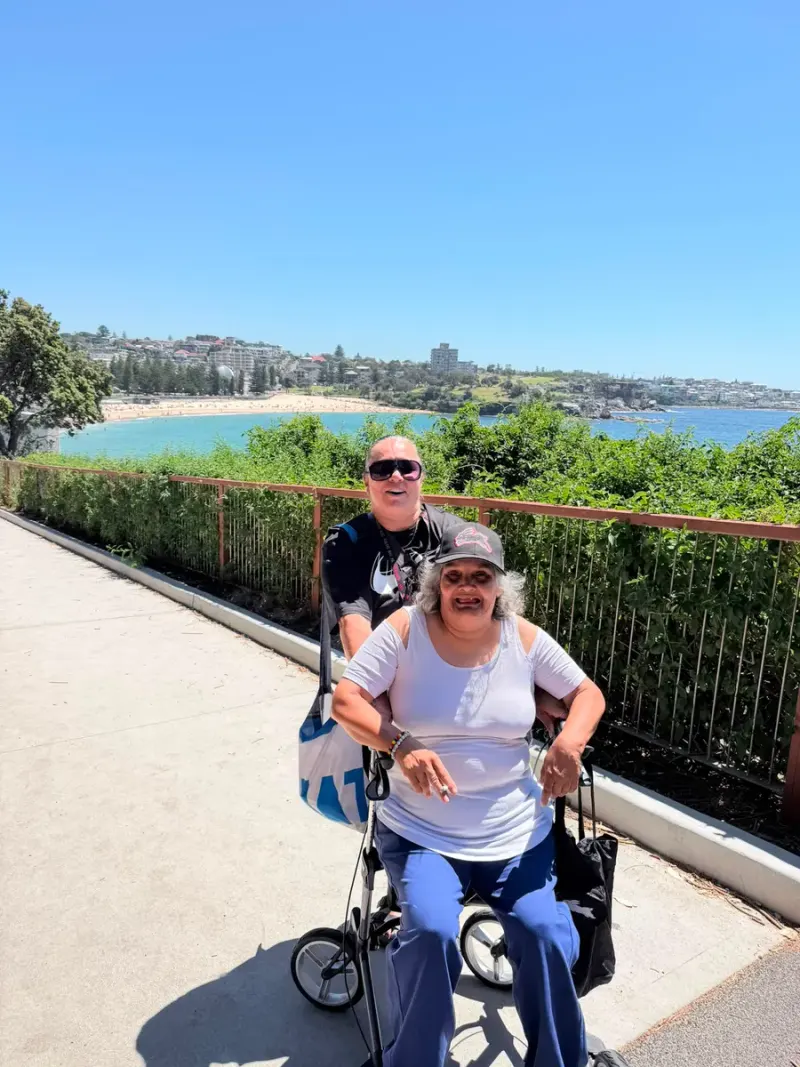
An Aboriginal support worker is an NDIS support worker who is Aboriginal or Torres Strait Islander. Some participants tell us that shared identity helps support feel safer or more familiar from the first shift. This guide is written by an Aboriginal-owned provider and describes the practices we expect in our own service. It covers connection to Country and community, cultural load, yarning and Sorry Business. Reliability, respect and verifiable checks still apply to every worker.
What does an Aboriginal support worker bring that’s different?
In one word: recognition. A worker with relevant lived experience may already understand family and community obligations, the role of Elders and why trust in services can take time. That can reduce the burden of explaining culture in your own home. It does not mean every Aboriginal worker is the right match or that every community has the same practices. The participant decides whether the support feels culturally safe.
What are the attributes of a good Aboriginal support worker?
Everything on our general list — punctual, consistent, respectful of your choices, clear communicator (see choosing an NDIS support worker) — plus attributes that only matter more in community:
- Discretion. Communities are small and connected. A good worker holds what they see and hear in your home absolutely privately — including from their own family and yours.
- Kinship literacy. They understand family obligations and roles without needing a diagram, and they respect the place of Elders and family in decisions when that is how you want decisions made.
- Comfort with yarning. Relationship first, task second — without the shift dissolving into a chat that gets nothing done.
- Cultural humility. Aboriginal Australia is hundreds of nations, not one culture. A good worker never assumes your community’s ways are theirs — they ask, and follow your lead.
- Steadiness with services. They can sit with you in appointments and deal with systems that have not always been safe for our mob, and advocate without taking over.
What does connection to Country mean in disability support?
For many Aboriginal people, Country is connected with family, history, identity, culture and wellbeing. The NDIS First Nations Strategy 2025–2030 recognises First Nations concepts of disability and wellbeing and prioritises culturally safe, place-based approaches. In support work, the practical question is what connection means to the individual participant: it may involve planning disability-related support for travel, family or community events when this fits their goals, plan and agreed supports.
Why does staying connected to your mob matter?
For some participants, staying connected to family, kin and community is a central goal. Support can help with transport, planning and participation when these activities relate to the participant’s goals and funded supports. Describe the people, places and events that matter when discussing goals with the NDIA. The NDIA decides what it will fund, and the provider then agrees how the funded support will be rostered.
What is cultural load — and why shouldn’t you carry it?
In this guide, cultural load means the extra effort a participant may spend repeatedly explaining cultural preferences, family obligations or communication needs to changing workers. That can take time away from the support itself. A provider can reduce this burden by recording preferences with consent, keeping the team small and checking rather than assuming. This is part of the difference between cultural safety and cultural awareness: the Australian Institute of Health and Welfare’s cultural safety monitoring framework centres the experience of the person receiving care.
How does yarning change the way support works?
Yarning is relationship-first communication that can be unhurried, story-based and two-way. Some people find this approach makes it easier to explain what is happening and what they want from support. At planning time, an Aboriginal support coordinator can help organise the participant’s own words and relevant evidence. The NDIA still makes the funding decision.
Men’s Business, Women’s Business and who supports you
Some participants have gender, age, privacy or community preferences for personal support. These preferences may be cultural, personal or both, and the participant decides what matters. Ask the provider to record the request, explain current worker availability and arrange a meeting before regular support starts where possible. A preference is valid even when a provider cannot guarantee a particular match; our guide explains how to request an Aboriginal support worker and what to ask next.
What should a support worker do during Sorry Business?
Sorry Business can change travel, family and roster arrangements at short notice. Ask a provider how it handles notice, cancellation terms, worker availability and continuity of essential support during Sorry Business. A culturally safe provider should explain the practical options without asking for unnecessary personal detail. Check the service agreement so the process is clear before it is needed.
Do you have to have an Aboriginal worker if you’re Aboriginal?
No — and anyone who assumes so has missed the point of choice and control. Some Aboriginal participants specifically want an Aboriginal worker. Others are comfortable with any worker who is genuinely culturally safe. Some prefer a worker from outside their own community circles precisely because communities are small and privacy matters. All of these are valid choices, and they are yours to make and change. The real test is not the worker’s identity but how support feels: safe, respectful, unhurried, yours. It also runs the other way — Aboriginal-owned does not mean Aboriginal-only, and non-Aboriginal participants are welcome at Tegrity and supported by the same team. If you are weighing up what provider ownership does and doesn’t guarantee, our Aboriginal vs mainstream provider comparison covers it honestly, including when a mainstream provider is the right call.
Do Aboriginal support workers have the same checks?
The same safeguards apply regardless of a worker's identity. The NDIS Commission requires a current Worker Screening Clearance for workers in risk-assessed roles and applies the same NDIS Code of Conduct to all providers and workers. At Tegrity, every support worker holds a current screening clearance and completes the Worker Orientation Module. Cultural connection is never a substitute for professional standards; our companion guide explains the checks and evidence you can ask about.
Frequently asked questions
Do I have to have an Aboriginal support worker if I’m Aboriginal?
No. Choice and control means exactly that — the choice is yours. Many Aboriginal participants specifically want an Aboriginal worker; others are comfortable with any worker who is genuinely culturally safe; some prefer a worker from outside their own community circles for privacy reasons. All of these are valid. What you should never have to accept is a worker who makes you feel unsafe, judged, or like a cultural educator in your own home. The right question is not “is this worker Aboriginal?” but “do I feel culturally safe with this person?” — and only you can answer it.
What is cultural load?
Here we use cultural load to describe the extra effort a participant may spend repeatedly explaining cultural preferences, family obligations or communication needs. A provider can reduce it by listening, recording preferences with consent, keeping the team small and checking rather than assuming.
Do Aboriginal support workers need the same checks as other workers?
Yes. The same worker-screening and conduct rules apply regardless of a worker’s identity. Workers in risk-assessed roles need a current NDIS Worker Screening Clearance, and all NDIS providers and workers must follow the NDIS Code of Conduct. Tegrity requires current screening for every support worker.
Can my NDIS plan fund staying connected to community and culture?
Your plan may fund disability-related support that helps you take part in cultural and community life when the support fits your goals, plan and current NDIS rules. The ordinary cost of an activity is not automatically funded. The NDIS budget guide explains social and community participation funding; our community participation page shows how Tegrity delivers the support.
Related guides
Support from workers who already understand
Tegrity is Aboriginal-owned. Our team includes Aboriginal support workers and coordinators, every support worker holds a current screening clearance, and you can tell us your preferences about gender, age or community connection. We will discuss fit and current availability honestly. Everyone is welcome.